

Why Clean Gutters Are an Essential Step for Spring Cleaning
Spring cleaning is a great way to get your home in order following a busy winter – especially after several months spent indoors because of the colder weather. Amongst the top priorities are deep cleaning the carpets, dusting every last ornament and finding a home for those Christmas presents that have been sat in the corner for months.
But how many people take a step outside and consider the exteriors of their home? In this post, we’ll discuss why guttering should be added to spring cleaning lists up and down the country…
The reasons behind spring cleaning
The saying goes that a tidy house allows for a tidy mind. This is no doubt the reason many people grab the cleaning supplies from March to May. While it’s easy to put things off over the festive period, when there are lots of other things to do, spring allows people to focus on getting things clean and tidy – not to mention the brighter days shedding more light on the mess we’ve made!
Another popular reason for spring cleaning is to keep up appearances. Whether it’s neighbours passing by or friends and relatives popping over, you want your house to look at its best simply to give off a good impression.
Gutters contribute to both of these factors. With trees shedding their leaves in autumn and plenty of rainfall in winter, gutters in spring are typically full of debris which has been turned into a mulchy mess by shower after shower. That’s hardly conducive to a tidy mind, nor is it the best look from the outside of your home.
A timely reminder
On top of the reasons above, gutter clearance and spring cleaning go hand in hand. Most gutters will naturally gather a significant amount of leaves and other debris over the course of the year. That’s why we recommend an annual clean for gutters as a general rule of thumb.
With spring cleaning happening every year from March onwards, it provides the perfect timely reminder that your gutters are ready for a clean.
Preventing damage
Above all else, gutter clearance can prevent more serious problems further down the line. When gutters become clogged, they can leak and overflow, which allows to water to get onto your walls and even affect your building’s foundations.
Alternatively, the added pressure from debris, made heavier by rainwater, can cause gutters to break or pull away from your roof. All of this will be much more expensive to fix than paying for a simple gutter clean once a year.
Ready to spring into action
Unlike most spring cleaning jobs, gutter clearance has the added benefit of protecting your property over the course of the year. However, also dissimilar to those other jobs, it’s not something you should tackle alone.
At DPR Roofing, we’re fully trained to work at height and have a wealth of experience in roofing and guttering. If you’d like to find out more about gutter clearance in Pontefract or book in your property, don’t hesitate to contact us on 01977 220016 or email [email protected].


Do Roofs Leak in Summer?
Summer is a time for relaxation. Enjoying the sun (hopefully) in your garden, at the seaside or even further afield. That relaxed vibe usually applies to your roof too. With the worst of the weather gone, you can forget about leaks, water ingress and damage to your roof.
But can you really? In this post, we’ll discuss why summer is just as important as any other season when it comes to your roof.
Winter is worst for weather
It’s a well-known fact that roofers are busiest in winter. Anyone who doesn’t already know that will soon be brought up to speed when they try getting a new roof just before Christmas. That’s quite simply because of the winter weather. Heavier and more frequent rain – often several days at a time – will expose pretty much any faults in your roof.
Weather can also make small problems worse, from high winds getting under loose tiles to freeze-thaw action making cracks bigger over time. When summer comes around, and the rain is much lighter and less frequent, it’s seen as a break for your roof.
But is summer leak-free?
While it does rain a lot less in summer, those problems in your roof are by no means gone. If your roof was previously leaking, it might subside for a few months, but you can pretty much put your house on it coming back later in the year.
Even worse, the small amount of summer rain could continue to get into your roof without detection. One silver lining with heavy rain is that it’s usually visible when it leaks in. On the flipside, summer leaks could go unnoticed and potentially cause more long-term damage.
One thing that can be said about summer is that the rain is less likely to cause new problems. As mentioned above, winter brings high winds and low temperatures which can have an impact on even the best roofs. Leaks in summer will generally only happen when the problem was there to begin with.
Summer leaks: the verdict
All in all, the answer is yes – roofs can leak in summer. That could be a noticeable leak during a summer shower or a hidden leak with small amounts of water getting in.
Whatever the case, now is the best time to act. Roofers have much better availability through the summer, with most people forgetting about their roof and concentrating on their garden. You’ll also benefit from a faster roof replacement or repair job, with less chance of rain delaying work on your roof.
Summer roof repairs and replacements
Whether your roof is leaking during summer or you’re concerned about a leak that’s mysteriously disappeared, DPR Roofing is here to help. Operating across Pontefract for over three decades, we’re committed to finding the root cause of roofing problems and providing long lasting repairs.
To find out more or arrange a quote, simply email [email protected] or call us on 01977 220016.

Is It Safe to Get on Your Roof?
If your roof is leaking, it can be incredibly frustrating seeing water come into your property. It’s only natural that you’ll want to do something about it. But should you get on your roof to take a closer look or try and fix it yourself? In short, the answer is no…
The dangers of roofing
From caulking your windows to relaying the lawn, there are plenty of jobs you can do around the home with a bit of DIY know-how or some instructional videos. Unfortunately, roofing does not fall into this category.
Professional roofers require rigorous health and safety training so they can work at height safely. Just getting on your roof will put you at serious risk, before you’ve even attempted to work with different tools and materials while you’re up there. Not to mention the risk of those around the building if anything falls off.
On top of your own safety, you’ll be putting your property at risk too. Something as small as a foot in the wrong place can cause costly damage to your roof. That’s especially true for roofs that are already leaking, as they will typically be a bit more prone to damage. While your initial intention might be to save money, it could actually cost you a lot more.
What can I do to check my roof?
With all of these safety concerns in mind, getting on your roof is definitely a big no-no, regardless of how confident you feel or how good you are at other DIY jobs. Like electrical work, roofing is simply not worth the risk for yourself and your property.
That said, there are some ways you can check the state of your roof if you want some assurance about its condition. One simple example is the daylight test:
- Go up to your loft or roof space when it’s nice and bright outside
- Turn off all the artificial light inside so the space is completely dark
- Look for any daylight coming through your roof’s covering
- This indicates a break in the roof – if light can get through, so can rainwater
Another way to check your roof is from ground level. You’ll probably have to move about 20 yards away from the building to get a better view of the roof. Look across the entire surface of the roof, checking for any broken, loose or missing tiles or slates.
Check the flashing around any joins in the roof too. Any loose or missing flashing could let water in around the chimney, dormer, skylights or where two planes meet. Finally, take a look at the guttering around your building. Cracks, leaks or loose parts will need to be taken care of by a professional.
Get a roofing expert in
Whether you’ve got a leaky roof or just want to check its condition, the best course of action is always speaking to a professional. DPR Roofing can lend a helping hand for roofs across Pontefract and the surrounding areas.
Commercial or domestic, we’ll draw upon 30+ years of experience to identify any issues with your roof and provide long-lasting repairs. Rest assured, all of our team are fully trained in health and safety and working at height.
Call us on 01977 220016 or email [email protected] to arrange a quote.

How to Prepare Your Roof for Cold Weather
Cold weather puts every aspect of a building to the test. Insulation, heating and – you guessed it – the roof. Thankfully, there are a few measures you can take to make sure your roof is ready for everything winter has to throw at it.
In this post, we’ll look at three simple steps to prepare your roof for cold weather.
Make sure it’s insulated
First on the list is insulation. As part of your home’s thermal envelope, your roof is responsible for keeping heat inside. Along with the walls, doors, windows and floor, it needs to offer effective thermal insulation to stop your house getting cold and your heating bills going through the roof.
According to Which, loft insulation saves households an average of £215 per year on energy bills. While in 2021 most homes will already have some form of insulation, it’s best to check its thickness to see whether it meets the current standards.
Nowadays, the recommended thickness for loft insulation is around 250mm, compared to less than 200mm in the past. It could be well worth an upgrade to reduce the amount of heat escaping through the top of your property.
Visual checks
Aside from heat retention, the main concern for your roof in cold weather is actually the drizzle that tends to come with it. In other words, leaks. While you should never attempt to get on your roof, there are a few checks you can do safely on the inside and outside of your property.
Go up to the loft while the sun is out and turn off the lights. If you can see any daylight coming through, it means there’s a break in your roof’s cover which will need to be fixed. Of course, you should also turn on the lights and have a look round for any damp patches or water ingress.
Next, head outside and take a look at your roof from ground level. You’ll probably have to take a few steps back or cross the road to get a proper view. Look for any missing tiles, broken gutters or anything else that looks awry. If you spot anything, be sure to call a local roofer to take a closer look.
Get an inspection
Without a doubt the best way to prepare your roof for cold weather is with a professional inspection. With temperatures dropping, even the smallest crack can allow moisture in, which will expand when frozen. Over time, this will make tiny problems develop into significant ones, allowing more water in and eventually causing a leak.
A professional roofer, trained to work safely at height, can make sure everything is watertight and ready to go. If you want to take a preventative approach with your roof, it’s best to get an inspection every year. Over time, this could save you a lot of money and stress by keeping your roof at its best rather than simply reacting to leaks.
Here when you need us
If you’re in need of some professional assistance with your roof this winter, don’t hesitate to get in touch with DPR Roofing. Based in Pontefract, we have over 35 years’ experience in roof repairs and replacements.
Whether you’ve spotted a mysterious leak or you just want to give your roof a health check when temperatures drop, we’re on hand to help. Give us a call on 01977 220016 to arrange a quote.
2 Types of Roof Repair You Don’t Want to Put Off
When you spot an issue at your home or commercial property, it can be tempting to ignore it. While that might be possible with a jamming door or flickering lightbulb, there are some problems that need to be tackled as soon as possible.
That’s exactly the case with your roof, where even the smallest issue can lead to further damage and develop into something serious. In this post, we’ll look at two common types of roof repair that you definitely don’t want to put off…
1. Loose tiles or slates
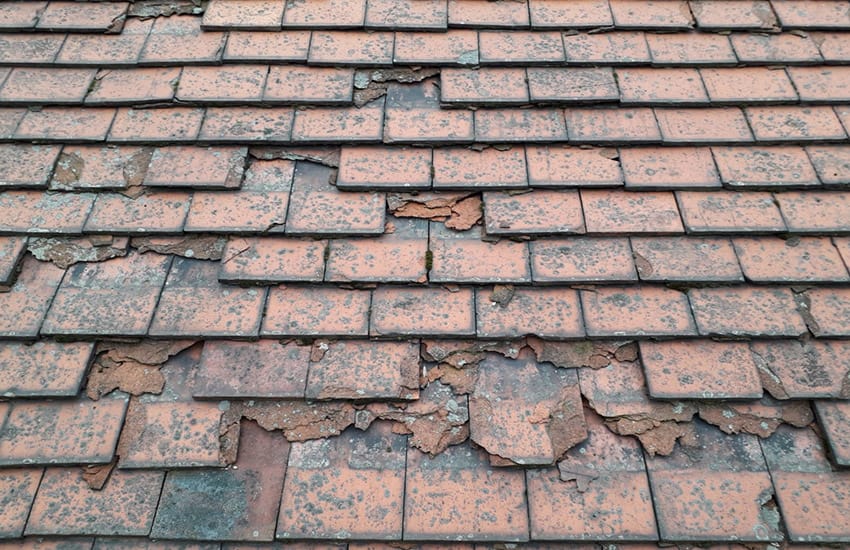
You’ll be able to spot loose tiles or slates on your roof simply by looking up at it. Tiles and slates could be cracked, wonky or have even slipped out of place completely. Why? They might have been victim to high winds or been knocked by some larger debris like a branch. In most cases, however, it’s because the nails holding them in place have worn away.
While loose roofing materials might seem like a simple eyesore, they’re actually more serious than that. They act as a break in your roof’s covering, allowing rainwater to get in. That could cause a leak, as well as leading to more tiles becoming loose.
Having a few loose tiles could also be a sign that the nails holding the rest of your roofing material in place are wearing away, meaning it’s best to renew your roof in the near future. Whatever the case, it’s best to get them seen to as soon as possible.
2. Blocked outlets or gutters
Your roof’s there primarily to stop water getting into the building. Once that’s done, it’s up to your guttering to guide it away and down the drainpipes. If there’s a blockage anywhere along the way, it won’t be able to do that properly.
Blocked gutters might seem like a small problem, but the consequences can be huge. Rather than being guided away, water will overflow onto your walls. This will cause the pointing to break down and allow water to get into your property, leading to damp and potentially structural damage.
The same is true if water gathers at the bottom of the building. In this case, it could get to the foundations of your home or commercial property, potentially contributing to subsidence. And it’s fair to say a blocked gutter is quicker, easier and far cheaper to tackle than subsidence…
Act now, relax later
With your roof and gutters playing such a critical role in protecting your property, even the smallest issue can develop into something really serious. If you put it off, it will cost you a lot more and cause you even more stress further down the line.
At DPR Roofing, we encourage a proactive approach to roofing. By acting now and nipping small issues in the bud, you can relax later with complete peace of mind that your roof is doing its job. To arrange a quote, give us a call on 01977 220016 or email [email protected].

A Guide to Roofing on Listed Buildings
Listed buildings are some of the most important properties in the UK. They’re protected because of their architectural or historic interest, with many of them over a century old. However, this can add some complications when you need to renovate or repair them – and roofing is no exception, as this post will discuss.
The complications of listed building roofs
Listed buildings have two complications when it comes to the roof. First and foremost, all listed buildings are protected from demolition, extension or significant alteration by Historic England and local authorities. This alteration covers the main structure of the building, any fixtures such as windows and doors, and – you guessed it – the roof.
Basically, it includes anything that affects the overall character of the building. Things that affect the reason it was listed. If a house is listed because it’s a shining example of houses from the Victorian era, giving it a sparkling new tiled roof will no doubt affect this.
The other challenge is simply that these buildings are typically older. According to Historic England, “The older a building is, and the fewer the surviving examples of its kind, the more likely it is to be listed” and “particularly careful selection is required for buildings from the period after 1945.”
In other words, the vast majority of listed buildings are at least 75 years old. Working on older roofs usually requires a bit more care, and ideally some specific experience working with roofs from similar buildings.
Can I renew a listed building’s roof?
While listed buildings are protected from alteration, it’s not completely prohibited. If work is required that will actually help preserve the building in the long run, it wouldn’t make sense to prevent it.
This is where listed building consent comes into play. To make significant alterations to a listed building, you need to apply for consent through your local authority. Applications take around eight weeks to process, so it’s well worth putting in a bit of extra care and attention.
Your application will be more likely to be approved if you explain how the work could actually help protect the building. This is certainly the case for roofing repairs or renewals, as the roof basically protects the entire property from the elements.
You should also outline how every effort will be made to minimise the impact on its heritage. This includes using the same materials or as close as possible to the original style and maintaining the original structure and slope of the roof.
Pontefract’s roofing experts
Whether your property is 20 or 200 years old, a strong and healthy roof is critical to protect it from the elements. At DPR Roofing, we have a wealth of expertise working roof repairs and replacements for buildings of all shapes, sizes and ages across Pontefract and the surrounding areas.
If you would like to talk more about your project or arrange a no-obligation quote, simply call us on 01977 220016.

3 Essentials for Your Flat Roof
Flat roofs are a common feature on house extensions, garages and many commercial properties. While they have the same essential purpose as a pitched roof – to keep water out – there are a few differences in their structure.
In this post, we’ll look at three must-have features for any flat roof if you want to protect whatever’s underneath.
1. Waterproof covering
The most important feature of any flat roof is a waterproof covering that keeps out the rain. While pitched roofs use tiles or slates, on flat roofs the waterproof covering can be provided by a variety of membranes including liquid systems, fibreglass coverings and single ply sheets or felt.
Whatever the case, the waterproof membrane will need to be regularly checked – and repaired or replaced when necessary – to ensure it provides comprehensive protection for the roof. Compared to pitched roofs, which last anywhere between 30-100 years, flat roofs need replacing every 10-20 years, and it’s best to have them checked annually to maximise their lifespan.
2. Dry decking
Decking is obviously a must for any flat roof, providing a surface where the waterproof covering can be applied. But it’s also essential that this decking is dry. This goes without saying for new flat roofs, which will feature brand new, dry decking.
However, far too many flat roof repairs will leave the decking wet. When the waterproof surface is penetrated, rainwater will be able to get into your flat roof’s structure for days, weeks or months until it’s fixed.
Some contractors will simply patch up the damage and recover the surface. Leaving the decking wet will leave the flat roof weak and vulnerable to further damage. Instead, it’s essential that any damaged decking is replaced with fresh, dry decking.
3. Slight fall
Despite the name ‘flat roof’ suggesting they’re completely flat, flat roofs also need a slight fall to work at their best. According to British Standards for construction, flat roofs should have a minimum fall of 1:40 at design and a finished fall of 1:80. That means for every 40 or 80 cm across the surface of the roof, it would fall by 1 cm.
To put that in context, pitched roofs have a much steeper gradient of between 1:3 and 1:2. This slight gradient in the roof’s structure allows water to run off much easier. This avoids water standing or pooling on your roof, minimising the risk of leaks and excess weight on your flat roof.
Flat roofing experts
Flat roofs are quicker, easier and more cost-effective to install than their pitched alternatives. But that doesn’t mean they should be done on the cheap. At DPR Roofing in Pontefract, we know everything there is to know about flat roofing – from the essentials to the smallest details.
From flat roof felts to liquid roofing systems, we use a range of materials to provide new flat roofs and roof repairs tailored to your budget and requirements. That’s all completed by an expert local team with over 35 years’ experience in the industry.
How Often Should Gutters Be Replaced?
For many property owners, thinking about replacing the gutters is probably one of the last maintenance issues that would cross their minds. Generally, people are aware that gutters need cleaning out a few times a year to prevent blockages caused by leaves, twigs or moss, but not that the gutter system will need completely replacing at some point.
However, keeping your gutters maintained and in full working order is essential to have a proper drainage system and prevent any issues further down the line. Read on as we discuss when your gutters need replacing.
What happens when you don’t replace gutters?
Leaving the gutters on a building for many years without carrying out proper maintenance can have serious consequences if they become weakened, blocked or their alignment starts to slope over time.
Water that can’t effectively run off the roof and through the gutters can get onto the walls and into your property. In some cases it could even affect the foundations. From damp and mould to structural damage, this can lead to several costly issues for your property.
When should they be replaced?
Generally speaking, gutters made from aluminium or galvanised steel can last upwards of twenty years with proper care, and copper gutters can even last as many as fifty years before they need replacing in the right circumstances. Plastic or uPVC guttering has a slightly shorter lifespan of 20 years or so but is still far more cost-effective than the alternatives.
All that said, leaking gutters don’t always need replacing. Instead, a bit of maintenance will usually do the trick. Keeping gutters blockage-free with clearance once or twice a year will prevent most issues.
Professional gutter repairs can also rectify most problems with cracks or misalignment. However, if blockages or cracks are left unaddressed, then you could have a replacement issue on your hands.
How can I make my gutters last?
The most important factor in ensuring your gutters remain in good shape for as long as possible is by taking care of them. Hire a professional to clear out your gutters once or twice a year and prevent any leaks caused by substance build-up. They can also inspect the gutters for any areas of damage and fix any issues before they cause major problems.
Check your gutters in dry weather and when it’s raining to ensure that the weight of the water isn’t putting excess pressure on the pipes and making them slope, or that water isn’t running through them properly. If your gutters are made from steel, check them over to make sure there aren’t signs of rust as this can cause holes and splits to form. Look after your gutters properly and they can last a long time before they will need replacing.
Specialist guttering services
Whether it’s small repairs and clearance or a full replacement, the team at DPR Roofing has over 35 years’ experience in gutter maintenance. With professional guttering services across Pontefract, we can give you full peace of mind that water isn’t getting to your walls or foundations and save you money on repairs in the long run.

How Long Does Roof Replacement Take?
While many roofs can be repaired again and again, there comes a time when replacement is the best option. Not just for the roof’s function, but to save you the hassle and cost of recurring repairs in future.
As with any work on your home, you’ll want to know roughly how long it’s going to take – and you don’t want the response “how long is a piece of string”. Broadly speaking, roof replacement can take anywhere between one day and one week.
To find out where on that scale your roof replacement sites, you’ll need to factor in a few aspects of the job at hand. Read on as we take a closer look at how long roof replacements usually take.
Sizing things up
The size of your roof will naturally have an impact on the duration of the job. A four-bed detached home will take longer to re-roof than a two-bed terraced property. Smaller jobs, like flat roof replacement, can even be done in a single day.
That said, it’s not always down to size alone. Many roofing companies can increase the size of their team based on the size of the job. So, they won’t send the same two- or three-man team for a large commercial re-roof for example.
Check the weather
In a country where it rains on around 160 days a year, weather can certainly play a role in the duration of your roof replacement.
Good roofers will keep an eye on the weather forecast and avoid work when it’s too wet. Not just because of their own safety, but to protect your roof space from the elements. After all, there are parts of the re-roof where your roof will be uncovered.
This could add several days to the job in winter, while in spring and summer it’s usually easy to find a few consecutive dry days to complete the job.
Fitting you in
As well as the duration of the job itself, it’s worth considering the time it takes for roofers to fit you in. Most roof replacements can be completed in a few days, but that doesn’t always mean you will have a new roof in a few days from the first call.
Good roofers will be busy all year round, with winter a particularly busy season for obvious reasons. That’s why it’s so important to be proactive with your roof. Book in a professional inspection once a year to check for any problems, allowing roofers to recommend as early as possible when your roof needs replacing. If it’s time for a re-roof, start getting quotes as soon as possible, so you can book it in early before things get worse.
Book your roof replacement today
DPR Roofing provides high-quality, long-lasting roof replacements in Pontefract and the surrounding areas. With over three decades of experience, you can rely on our team to get the job done well and get it done on time.
Contact us today on 01977 220016 to arrange a detailed, no-obligation quote.

COVID-19 Customer Update
After careful consideration and based on further guidance received from the Government we have decided to re-open for business from Tuesday 14th April to provide services following strict procedures that comply with the COVID-19 guidelines.
We are still able to quote and complete all roofing problems and we are maintaining a safe distance to keep our staff and customers safe. Please note we WILL NOT enter any persons home or outbuildings to carry out quotes or works until we are informed this is safe to do so.
We will, of course, operate within the guidelines set out by the Department of Health & Social Care (DHSC), Public Health England (PHE) and the Health and Safety Executive (HSE) to ensure we continue to work safely.
We will continue to support you, stay safe.