

4 Ways to Keep Your New Roof Budget-Friendly
Replacing your roof is a worthwhile investment, adding value to your property and protecting it from the weather. By preventing more serious issues from water ingress and eliminating the need for repairs, it could even save you money in the long run. That said, it’s still a big cost to take on.
That leaves a lot of homeowners looking for ways to reduce the cost. Fortunately, there are some ways to do so without compromising on quality. Read on as we look at four ways to cut the costs of your new roof without cutting corners.
1. Shop around
First off, before settling on a roofing contractor for your new roof, it’s important to shop around to make sure you’re getting the best deal. Get quotes from several roofers and make sure you always take a look at their previous work before signing a contract.
Be wary of extremely low quotes, as this may be a sign of below-average contractor. You also need to make sure the roofing company you are working with is insured and offers a guarantee for their work.
2. Get regular inspections
Looking at the broader picture, regular inspections on your existing roof are a good way to keep costs down when it comes to a replacement. By understanding your roof’s condition year-round, you can replace your roof as soon as it is needed. Rather than waiting around for the roof to fail or collapse, you can tackle the issues as and when necessary.
If you replace your roof before further damage has been done, you can keep costs down as less work will need to be done to secure your home. It may be that the tiles can be replaced without the need for structural work, for instance, if you spot a problem early.
3. Check your insurance
There are some instances where roof replacements or repairs are covered by insurance, as long as damage to your roof hasn’t been caused by neglect. If a storm causes serious damage to your roof, for instance, your homeowner’s insurance or property insurance may cover the costs of a replacement.
Be aware of your homeowner’s insurance beforehand to make sure you’re covered for any accidental or natural damage. Even if your insurance does not cover your entire replacement costs, it may reduce the costs overall.
4. Think long term
Unfortunately, all roof replacements are going to be fairly costly. But in the long term, a new secure roof will be well worth the money. Frequent repairs can end up costing much more than an entirely new roof over time
A new roof, installed by a professional, experienced company, will ensure your property and loved ones are safe and can reduce your maintenance costs overall.
Don’t chance it
The best way to reduce the cost of a new roof is to get it done by the experts. That way, you can rest assured you won’t have to fork out for any added costs or repairs at a later date. Sound good? DPR Roofing provides roof replacements to the highest standards across Pontefract and the surrounding areas.

A Complete Guide to Roofing
Roofing is essential, whether you’re a homeowner, commercial property owner, landlord or housing association. It protects your property and everything inside it from damage. In short, a good roof could save you vast amounts of money over the years.
With that in mind, it’s always a good idea to get yourself clued up on one of your property’s most important features. Read on for our guide to roofing – from inspecting your roof to getting the best deal.
The first impression
Your first encounter with any property and its roof is on the initial viewing. It’s your first opportunity to check the state of the property, and there are several things you should consider:
- Windows – Check the glazing type and the frames
- Wiring – Consider the number, location and condition of plug sockets
- Plumbing – Inspect pipes, toilet flushes and taps, along with the radiators and boiler
- Damp – Make sure the property doesn’t have any damp or discolouration on the walls and ceilings
- Roofing – How old is the roof? Is there adequate ventilation? Are they any signs of wear and tear? Is it leaking? A quick paint over may be hiding damp ingress.
- Guttering – Finally, check whether the gutters are fully functioning, with no breaks, leaks or overflow
Finding problems
Of course, not all problems are apparent on the first viewing and they can always develop over the years. That’s why regular property inspections are important to keep your roof functioning well. The question is, how often should your roof be inspected?
As a rule, we recommend checking your roof twice a year – on top of professional inspections. Ideally, your roof should be inspected in the months leading up to winter, as well as the months following the coldest weather. This way, you can prepare for the heavy rainfall and ensure your property is protected, then make sure your roof hasn’t been seriously damaged following winter.
Here’s a quick list of things you should look for:
- Tiles
- Flashing
- Gutters (+clean out at least once a year)
- Moss
Top tip: Remember to check the inside of your property for any water ingress too.
The right solution
Roofing problems can range from a bit of moss to major structural issues like sagging. Needless to say, these don’t require the same solution. Some issues are simply down to maintenance, while others require a long-term repair. In some cases, your property may even need a full roof replacement to rectify the problem.
When choosing between maintenance, repairs and a replacement, consider the following factors:
- Costs – Will a more permanent solution save you money in the long run?
- Downtime – Do you need to patch things up quickly? Or will this simply cause more downtime in the future?
- Insulation – A roof that’s continually repaired when it needs more work will actually cost you more through energy bills
- Appearance – Let’s not forget the eyesore of a poorly kept roof. A replacement or large-scale repairs might be the best option to maintain the kerb appeal of your property.
Choosing a contractor
With a roof being so vital to your property and its contents, you want to make sure you have the right people working on it. First and foremost, you should never attempt DIY work on your roof.
Without the right training, you won’t be able to choose a suitable solution and it will take up far too much of your time – not to mention the safety risks of roof work. Just walking on your roof without training is highly dangerous both to you and the state of your property.
Here are our top 10 reasons why you shouldn’t repair or replace your roof:
- Safety – As mentioned, there are myriad risks when working at height
- Weather – This can make roof work even more challenging and unsafe
- Quality – The end results are never good enough with DIY work
- Longevity – As a result, they’re unlikely to stand the test of time
- Material quality – Without roofing experience, it’s almost impossible to choose the right materials for the job
- Material cost – Buying roofing materials at retail price will hit your bank balance pretty hard
- Appearance – DIY work is unlikely to keep your roof looking good, and could reduce the value of your home
- Time – Try balancing your day-to-day life with roof repairs. It could easily drag on for weeks.
- Support – Roofing is rarely a one-person job, requiring at least one person to assist. It’s difficult to get someone to commit to help you when you don’t know how long the job will take.
- False economy – At the end of the day, DIY roofing work often costs more than it saves in the long run. It’s a classic example of false economy.
So, who should you choose? Above all else, it’s important to get a company that’s experienced and trustworthy. You may get a cheaper quote from a ‘jack of all trades’, but there are all kinds of reasons why this is unadvisable. You get what you pay for and you may find that these contractors don’t finish the job or simply don’t provide the right standard of work.
Getting roofing quotes
Quotes are hugely important when you’re looking for roofing maintenance or repairs. They let you know how contractors plan to repair the damage to your roof and how much it will cost, typically in detail. Here’s what you should expect on a roofing quote:
- A visit to your property to inspect the problem area
- A full report of the issues that need tackling, with photos
- Details of how they plan to rectify problems
- The cost of repairs or replacements, broken down with the cost of materials included
Understandably, you want to get the best deal when you get a quote – and there are a few tips to make sure you get exactly that. Firstly, try to get more than one quote to see how different contractors plan to fix your roof and how much they are charging. Make sure they inspect the site thoroughly on their inspection too.
Try not to focus solely on price. Instead, consider the materials roofers are using, the guarantee on offer and the accreditations of the roofer. Be sure to consider the duration of the job too, especially if you’re willing to pay extra to have things done quickly.
Don’t forget the gutters
There’s plenty to be said for roofing and all the different factors of roof repairs. However, what’s also crucial is the guttering around the roof. Your gutters have the important job of directing water away from your property as it runs off the roof.
To do so effectively, they need to be installed properly, with the right slope and no breaks or blockages. Gutters should be cleared regularly to allow water to flow directly down the drainpipes. It’s also important that they’re made from a suitable material. PVC is the most popular material as it’s strong, waterproof, affordable and easy to produce.
The edge of your roof is also made up of fascias, soffits and barge boards, which need to be kept in a good condition to hold your gutters.
Any issues? Speak to the experts
Whether you’re looking for regular inspections and maintenance or considering a full roof replacement, DPR Roofing in Pontefract can help. With a wide range of commercial and domestic roofing services and over 35 years’ experience in the industry, we can provide a long lasting solution to any roofing problem.
Conman Paints Tiles Instead of Repairing – How to Avoid Rip-Off Roofers
The con-artist culture is growing year-on-year in the UK, with over 2,700 confirmed scam victims in 2018 alone. Unfortunately, roofing isn’t immune from these con-artists and cowboys and it’s more important than ever to stay vigilant.
An elderly couple in Birmingham recently fell victim to a roofing scam, where the culprit simply painted their tiles. In this post, we discuss how they were duped and how to avoid rip-off roofers on your property.
Vulnerable victims
The elderly couple from Northfield, just south of Birmingham, were told over the phone that they had around £400 worth of ridge tiles that needed replacing. Concerned and grateful to be alerted to the problem, the elderly couple eventually agreed to roofing work, which the scammers demanded almost £35,000 for.
The scam was only brought to an end, and the couple’s life savings protected, thanks to an off-duty police officer neighbour who reported the gang. While the police were able to recover some of the money, the couple were left around £5,000 out of pocket.
Later, when the roof was inspected, it was determined that no work had been done to their roof – other than a light coating of red paint. In fact, it appeared that some damage had been done from the excessive walking on tiles.
With 85% of doorstep scam victims aged 65 and over, it’s important to be aware of the key signs to look out for when spotting a con artist roofer so you can protect yourself and your loved ones…
Unsolicited contact
Even if you’re in desperate need of a new roof, avoid working with a roofer who knocked on your door or called your phone uninvited. Reputable, professional roofers will only contact you once you have made the first move to request their services.
Avoid opportunists
Unfortunately, there a number of scam artists out there that will target vulnerable home owners during a time of need. If there’s been a storm, intense rain or a long summer and a ‘roofer’ arrives on your doorstep to repair weather damage, the answer should always be no.
Get multiple quotes
Always avoid settling for the first quote that you receive, especially if it’s under suspicious circumstances. Good roofers take pride in their work, inspecting your roof thoroughly before talking you through problems and costs.
Don’t pay upfront
While some roofing companies will require an upfront deposit, you should never pay the full cost of work before the completion of the job. If your roofer is asking for payment upfront, to cover supplies, labour or material, it’s a sign you should look elsewhere.
Do your research
Generally, a quick Google search should tell you all you need to do about the reliability of a contractor. If they only have a mobile number available, have no reviews online or aren’t part of an established business, they’re probably not the roofer for you.
Choosing the right roofer
Roof replacements and repairs can be expensive. We get it. But opting for the cheapest, quickest option doesn’t always pay off in the long run. DPR Roofing in Pontefract is a team of local experienced roofers. Take a look at our past commercial roofing work to see a few examples of what we can do.

How to Get the Best Deal on a New Roof
Whether it’s for a residential or commercial property, a new roof is quite the investment. With that in mind, you want to make sure you get the best deal. However, this doesn’t simply mean opting for the cheapest option. Far from it, in fact.
There are a wide range of factors to consider when choosing a new roof, which can be far more valuable than a low price. REMEMBER: The price is what you pay, the value is what you get and the quality is remembered long after the price is forgotten.
Here is our complete guide to getting the best deal on a new roof.
- Thorough inspection
First things first, get your roof inspected thoroughly before getting quotes. This ensures the roofing contractor knows exactly what you need and what is suited to your property. Roofs differ from property to property, with factors such as the size and slope of the existing roof and the surrounding environment coming into play. So, it’s essential for roofers to assess your property and perform a thorough inspection before giving you a quote. Use only a qualified roofer otherwise you will be fed wrong advice and pay for unnecessary works.
- Shop around
As with any improvement on your property, you should look to get multiple quotes for the work you need. Why? It’s not just to get the best price – as mentioned. Getting several quotes allows you to get a good idea of what’s best for your property, and the different options available. So, rather than just going for the first deal on offer, shop around for something that will last longer or perform better.
- Superior quality
A high-quality roof installation will understandably make it a better deal for you. But how can you ensure that’s what you get? Look for accreditations when comparing contractors. Things like TrustMark, the Federation of Master Builders and SafeContractor separate the professional, highly skilled roofing companies from those who will leave you needing repairs further down the line.
- The best material
Choosing between different roofing materials isn’t just cosmetic. The material is a key component in protecting your property from the elements, so it can be a deal breaker when choosing between different quotes. Consider the longevity of different materials, their strengths and weaknesses, and how much maintenance they require. A cheaper quote usually means cheap materials and that means bad news. Some providers may offer a discounted quote because they’re using cheaper materials, but this will leave you out of pocket in the long run and will damage the appearance and value of your property.
- Longevity
With that in mind – how long is the roof going to last? A new roof is a long-term investment, so it makes sense to opt for something that lasts for as long as possible. However, this must be balanced against your budget and the amount of time you intend to stay at the property. The best deal for you isn’t necessarily the best deal for everybody else. While clay and concrete tiles typically last around 50 years, some alternatives will need to be replaced in a much shorter space of time.
- Guarantee
Is a warranty or guarantee part of your roofing quote? The best deals have longer warranties, which protect you from costs of materials or poor installation. This can add huge value to your roofing deal, as it means you’re insured against any future problems for the length of your guarantee or warranty. That said, it’s worth going through the warranty with a fine-tooth comb to ensure you’re aware of what exactly it covers.
- Duration
Something that’s not often considered with roofing jobs is how long they’ll take. However, this is a factor that can add considerable value to a quote. Some roofing contractors will add your job to a growing list of clients. They might not start your roofing project for several weeks, and once they do get started, they could leave it unfinished for a longer period than necessary. If contractors can give you a good estimate - or even a guarantee - of when your new roof will be finished, it can make a big difference when deciding which deal is best for you. Remember, a longer period of construction means more time lost in your home, more rent lost for landlords and more wasted time for commercial property owners.
- Money
Of course, when all of these factors have been considered, it’s then time to consider the value for money. And that can’t be done without looking at the price. Unfortunately, there’s no exact formula to work out the value of any given roofing quote. Instead, consider how important each aspect is to you. Rule out any quotes which are outside your budget, then compare those remaining based on the factors and what they’re worth:
- Quality – You get what you pay for, so compromising on price usually means accepting a lower quality job.
- Material – Similarly, cheaper materials tend to encounter more problems. It’s worth discussing this with contractors when they’re inspecting your property, as some properties may not need the most expensive materials.
- Longevity – Depending on your financial situation, you might be happy saving money now even if it means you have to buy again in the future. Otherwise, it’s worth paying more for a roof that lasts longer.
- Guarantee – This is arguably the most valuable thing in a roofing quote. It could cover a great deal of future costs.
- Duration – If you need to get up and running as soon as possible, especially for commercial properties or rented homes, it could be worth paying extra for a job that can be completed sooner. You may find that you earn back the difference from having a property that’s ready to use earlier.
Professional roofing services in Pontefract
If you’re looking to get the best deal on a new roof, DPR Roofing can help. We are experienced roofing professionals based in Pontefract, offering the highest standards of roofing across the board. Get in touch with our team to discuss our services or arrange a no-obligation quote for your property.
Does My Commercial Roof Need Maintenance, Repair or Replacement?
Whether you house your own business or the let space out to tenants, it’s paramount to keep your commercial property in good nick. As all commercial property owners will know, the roof is one of the most important parts of your building. Fail to take care of it and it will no doubt come back to bite you again and again. That’s why, when you encounter a problem with your roof, it’s important to get the right solution. This post looks at your options – comparing maintenance, repair and replacement – when it comes to commercial roofing.
Why does commercial roofing matter?
Commercial roofing is no less important than the roof over your home. If anything, it has a much wider effect. A commercial roof needs to protect numerous offices or retail spaces from rainwater. With that in mind, there are all kinds of benefits when you keep it in a good condition:
1. Repair costs
Water ingress can damage the inside of your building, from the ceiling and walls to more serious problems with electrics. With a high-quality roof, you’ll eliminate these problems and save both time and money dealing with constant repairs.
2. Downtime
You’ll also avoid the downtime that a leaky roof can lead to. When water is leaking into the building, it can pose a risk to employees or equipment/stock, meaning staff will have to stop working while it’s put right. That’s a clear loss of productivity for your business, or a long list of complaints from tenants if you’re letting space out.
3. Insulation
Your roof also needs to keep heat in the building. When it’s in a bad condition, it will let heat rise out of the top of your commercial property, making it difficult to maintain a comfortable temperature. For you, that means energy bills skyrocketing during the winter months.
4. Appearance
That’s not even mentioning the eyesore of a poorly kept roof. Whether it’s prospective tenants, employees or clients, people will be unimpressed by a leaky roof. It could impact employee morale and the reputation of your business – or put off prospective tenants if you’re looking to let out your commercial property.
What are your options?
If you’re having trouble with your commercial roof, you have three broad options to choose from to put things right – replacement, repair or maintenance. Here’s what you need to know about these three options:
Roof replacement
Roofs need replacing when they’ve undergone extensive, irreparable damage. A full-scale replacement will cost more than repairs but could be worth it in the long run. Why? For one, your roof won’t need replacing again for a long time if it’s installed properly. One important consideration, however, is that a roof replacement could take a few days complete, leaving your property unusable for a short period of time.
Roof repairs
Commercial roof repairs, on the other hand, deal with specific problems on the roof – like missing tiles, broken guttering or pooling water. They will be more frequent than a roof replacement but shouldn’t become a regular occurrence. Because repairs typically cost less than a full replacement, they’re usually the preferred option for commercial property owners – not to mention that they’re completed in less time.
Roof maintenance
As well as commercial roof replacement and repairs, your commercial roof may simply need some maintenance. Covering everything from gutter clearance to a new coating on flat roofs, regular maintenance will extend the life of your roof. While blocked gutters or a worn roof may push some property owners towards repair and replacement, it could be quicker, easier and more cost-effective to have the roof properly maintained. Unfortunately, once roofs have been neglected, simple problems will develop, which usually requires repairs.
How do you decide?
It’s easy to understand the differences between replacement, repairs and maintenance. But that doesn’t necessarily make it easy to determine which is best for you. In truth, there are several factors to consider when choosing the best course of action for your commercial roof…
Cost
It’s plain and simple. If you can’t afford a full roof replacement, the roof will have to be patched up with a repair for the time being. That said, the cost of constant repairs will stack up when a replacement is really the best solution.
Recurrence
A one-off repair could keep your roof working perfectly for a number of years. In other cases, it will need repairing again within a few weeks or months. If the latter sounds familiar, it might be time to look at having your roof replaced. Recurring problems cost a lot to continually upkeep, and the repairs clearly aren’t working in the long run.
Urgency
Another factor to consider with your roof is time. A full replacement will take longer than repairs or maintenance, as well as having a longer waiting list. If your roof needs a replacement urgently, it might be worth opting for repairs or maintenance to tide you over and stop any further damage.
Age
When deciding between your options, it’s worth factoring in the age of your roof. Roofs typically last at least ten years, increasing to 40, 60 or even 100 depending on the materials used. If your roof has been in place for a long time and you’re regularly having problems with it, it’s probably time to replace it. On the flipside, if you’re having problems with a new roof it is probably down to poor installation.
Looking to the future
Try not to focus on the short term when it comes to repairs and replacements. Effective repairs or a high-quality replacement will add value to your property and keep everything running smoothly in the future. Remember, if you opt for a full replacement, you’re cutting out all those recurring repairs on your roof.
Maintenance is key
Whatever choice you make, maintenance is definitely something you should consider going forwards. Roofs can last several decades if they’re installed properly. But they still require regular maintenance to keep everything working properly. Having your commercial roof inspected just once or twice a year could save you big money on repairs in the future.
Important considerations
Is your commercial roof causing you problems? Whether it’s a repair, replacement or just some maintenance that is required, there are a few tips to consider:
- Take your time – Even if your roof is on its last legs, there’s no need to rush and you’re not obliged to go ahead with any work on your roof. Shop about and get a few quotes and compare why they may differ, maybe quality of materials etc.
- Research – Don’t be afraid to check online for advice on different roofing problems. The more you know the better.
- Don’t DIY – Whatever you do, don’t attempt to inspect or work on the roof yourself. Working at height is very dangerous and requires a lot of training.
- Professional inspection – Get your roof inspected by a reputable roofing company. Be sure to get a detailed quote from them, outlining every aspect of the job as well as any insurance or warranty.
Experienced roofers you can trust
DPR Roofing is a team of roofing experts, based in Pontefract, with over 29 years of experience in the industry. Our commercial roofing services cover all bases, with everything from maintenance and repairs to full replacements. It all starts with a thorough inspection, where we’ll identify what’s wrong and recommend the best course of action with zero obligation on your part. Whatever the job, we’re committed to delivering first-class customer service, quality workmanship and unbeatable value for money.

Understanding the Difference Between Fascias, Soffits & Barge Boards
To understand any problems with your roof, it’s good to know about all the different components. And while most people are familiar with the tiles, flat roof decking and gutters, there are some more specific features that seem alien to most. Fascias, soffits and barge boards are three such things, which you’ll find around the edge of the roof. Fortunately, they’re pretty simple to understand. Read on as we explain the three features, their differences and how to keep them in the best condition.
Fascias
We’ll start with fascias. These are horizontal boards that your guttering is fixed to. They come down from the edge of the roof and are responsible for holding the guttering as well as protecting the edge of the roof’s rafters. When the roof has flush eaves – the edge is in close proximity to the property’s external walls – fascia boards can be attached directly onto the exterior wall. However, when there is a gap – known as closed eaves – the edge of the roof needs a soffit to protect the roof and carry the gutters…
Soffits
Soffits are the flat boards that cover an overhanging roof from the underside. They’re attached to the lower end of fascia boards and cover the area between the external wall and the fascia to protect the exposed part of the roof. This essentially creates a box around the edge of the roof, which requires ventilation to avoid condensation and decay. Fortunately, most soffit boards have ventilation built in. However, you can also opt for over fascia ventilation, which allows air to flow between the roof and fascia board through the top of the fascia without compromising the protection for the roof.
Barge boards
While fascias and soffits support the guttering of a property, barge boards are attached to a gable to provide added strength, protection and aesthetics. They appear as an inverted ‘V’ under the edges of the roof verge, protecting the exposed materials much like a fascia.
Fascia, soffit and barge board importance
All three components are visible from the outside of the property, meaning they have a big impact on the appearance of the roof. With this in mind, they are available in a range of styles and colours to match your property’s overall look. Because they hold the gutters and protect the edge of the roof, it’s also important that your fascias, soffits and barge boards are well maintained. One common problem faced on properties with soffits is swallows nesting within the enclosure between the soffit and the house wall. With this comes insects, moisture and potential damage to your property. While it’s against the law to intentionally destroy or disturb an active nest, you can prevent them nesting in future. This is done by sealing off the soffit with the roof, which needs to be completed during the winter months as this is when the birds aren’t nesting.
Need a hand?
If you’re having any problems with fascias, soffits or barge boards, it’s best to get it sorted as soon as possible. DPR Roofing in Pontefract can help, with both domestic roofing and commercial roofing services. Whatever the issue, we’ll put it right with an effective, long-lasting fix.

How Much Does a Flat Roof Cost for a Double Storey Extension?
Double storey extensions are a smart way to add more space to your property and increase its value. You could, for example, add an extra bedroom, en-suite bathroom, new living area and an office – which could transform any property. An essential component of a double story extension is the roof, with a flat roof often the most practical option. But how much is it going to set you back? Keep reading as we look at the cost of a flat roof on a double storey extension.
What is a double storey extension?
A double storey extension (or two-storey extension) is ‘exactly what it says on the tin’. It’s an extension to the home with two storeys. Rather than extending the ground floor alone, it provides more space for the second floor of the property too. It can be completed as one project, though some property owners decide to add the second storey at a later date. This requires a professional inspection to test the foundations of the original extension. The main limitation with double-storey extensions is the roof height. Planning policy typically requires extensions to be “sympathetic” to the existing property. Essentially, the roof of the extension shouldn’t exceed the existing roof height.
Pricing things up
A practical option for a double storey covering is a flat roof. They can cover areas of any size without adding too much to the cost of the double storey extension. Renewing a double storey flat roof covering would typically cost around £1000 - £1500 on an average bedroom extension over a kitchen, for example. Scaffolding may also be required, which could add to the cost.
Get your quote today
At DPR Roofing in Pontefract, we provide free quotes for jobs of any size. Our expert roofing services cover everything from new flat roofs to pitched roof repairs and guttering, with over 29 years’ experience in the industry. Get in touch today for more information on any of our services or to arrange your survey and quote.

Do I Need Planning Permission to Raise My Garage Roof?
When you’re raising your garage roof, planning permission may not be something you consider. Most homeowners are concerned with prices, contractors and getting the job done quickly. In fact, it’s something you could regret ignoring. This post discusses planning permission when it comes to raising your garage roof.
What the law says
So, should you apply for planning permission? In short, yes. The guidelines for planning permission state that any alteration raising from the existing roof plane by more than 150 millimetres requires permission. Chances are, you want to raise your garage roof by more than 6 inches.
Why it’s risky
Despite this, many homeowners decide to go for it without getting permission. Sure, this might seem like a quicker, simpler way. But it can soon backfire when an envious neighbour calls the council to report you. That’s all it takes for an enforcement notice to be sent out for you to undo any changes. Fail to comply? You could be subject to a fine or legal proceedings. The council can arrange to demolish your new addition and charge you for their troubles too.
How to apply for planning permission
When it comes to such a simple home improvement, it’s really not worth the risk of legal proceedings. Apply for planning permission through your local authority before starting work on your garage roof. It typically costs £172 in England and should be decided within eight weeks. This fee is nothing compared to the cost of altering your roof only to pay again to undo the work.
Doing things right
As well as getting planning permission, it’s important to find the best contractors to carry out work on your garage roof. That’s where DPR Roofing in Pontefract come in. We have over 29 years’ experience in roofing, with a team of fully trained roofing specialists. Whether it’s a raised garage roof or a complete roof replacement, we provide high quality results that stand the test of time. Contact us today to arrange your free quote.
Is My Roof Safe to Walk On?
Whether it’s for repairs or an inspection, many property owners may consider walking on their roof. The question is whether it’s safe or not. Nobody wants to put themselves at risk to save a bit of money on a professional job, after all. Read on as we explore the safety of walking on roofs.
Can I walk on my roof?
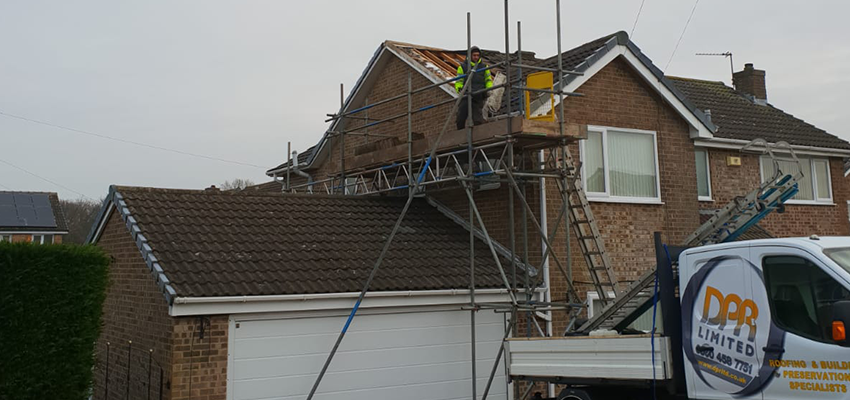
In short, the answer is no. It’s never a good idea to walk on any roof unless you’re trained to do so. Even the strongest looking roofs can be very fragile. And the results can be disastrous. The slope on a tiled roof makes it highly dangerous to walk on. Slipping or tripping on a loose tile is enough to send you tumbling causing damage to your property but most importantly yourself. Saving a few pounds is not worth risking your life. These problems aren’t eliminated on a flat roof. Even without the slope of a pitched roof, many roofs simply aren’t built for the extra load of a person’s weight. In the blink of an eye, the roof can collapse beneath you, leaving you seriously injured and your property in need of significant repairs. Remember; no domestic homes have any edge protection on their roofs so a fall to an untrained person is easily achieved.
What to do instead
Whether it’s to remove moss, fix gutters or simply inspect the state of your roof – there’s never an appropriate time to walk on your roof without training. The alternative?
Get in the professionals.
Accredited roofing companies have been trained, from top to bottom, to work safely on roofs. Not only does that prevent any injuries or casualties, it ensures your property is completely safe while work is being completed. DPR Roofing in Pontefract have nearly three decades of experience in the roofing industry and all of our staff are fully trained in the latest working at height and health and safety practices. Contact us for more information or to arrange your free quote.

5 Overlooked Essentials to Check at a House Viewing
Love them or hate them, house viewings are a must when you’re searching for a new home. And, if you’re buying, there’s nothing worse than finding out about problems once you’ve moved in – or even if you’ve just got your heart set on a home.
But what should you check? We don’t need to remind you to check the basics – like room sizes, parking space and the surrounding area. However, other essentials can slip through the net in all the excitement. Read on for five frequently overlooked features of a home when viewing.
Windows
While most people check how much natural light a house has, they often forget to check the windows thoroughly. Windows can have an array of problems which could cost a lot to fix:
- Check for the glazing type
- If windows are double glazed, look for condensation between the panes
- Does the property have wooden windows? They’re a beautiful feature, but be sure to inspect the wood for flaking paint or even pushing it slightly, to ensure there’s no decay or rot.
Wiring
A full survey will assess a property’s electrical safety. But on your viewing, be sure to check light switches and plug sockets:
- Are there enough for your needs?
- Are they located in the right places?
- What condition are they in?
Plumbing
Plumbing is yet another essential that can make or break a house. Make sure you go through the following:
- Check the pipes aren’t made from lead as this contaminates water
- Flush the toilet to check there are no problems
- Run the taps to test the water pressure
- Check if the radiators work
- Ask about the boiler – its age and energy efficiency
Roof (and guttering)
When viewing a property, you should also make sure you look up. Check things such as:
- How old is the roof?
- Is there any ventilation?
- Is there any signs of wear and tear?
- Are the gutters fully functioning?
Find out more about what to look for in a roof when buying a new home >>
Damp
Up there among the most easily missed problems is damp. Damp issues can come in all shapes and sizes but look for discolouration on walls and ceilings, as well as wallpaper or paint peeling away from walls. Often found in bathrooms, damp can also come in the form of black mould or fungi. You may even be able to sniff it out, so be sure to check for a stale smell.
Roofing specialists in Pontefract
As much as homeowners check and check again, sometimes the worst still happen. Through no fault of your own, you find yourself in need of roof repairs, or even a roof replacement. Don’t worry. DPR Roofing can help. We are Pontefract’s roofing experts with all the experience and expertise necessary to deal with your roofing problems. Speak to our team of roofing specialists today to arrange your free, no-obligation quote.